 Skip to content
Introduction
In many industries, the quality and durability of metal components directly affect product performance, safety, and service life. Whether used in automotive manufacturing, construction, shipbuilding, aerospace, or heavy machinery, metal surfaces must be properly prepared before painting, coating, welding, or assembly. One of the most effective methods for achieving this is shot blast.
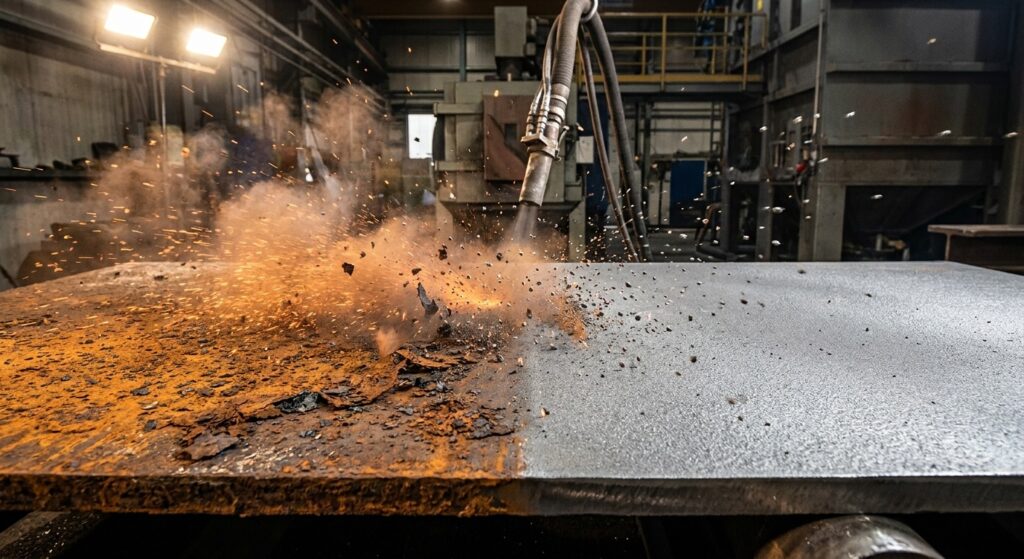
Shot blast, also known as shot blasting, is a mechanical surface treatment process that uses high-speed abrasive media to clean, strengthen, and prepare metal surfaces. By removing rust, scale, old coatings, and other contaminants, shot blasting creates a clean and uniform surface profile. This not only improves appearance but also increases the durability and long-term performance of metal parts.
In this article, we will explain how shot blast improves metal surface quality and why it plays an important role in extending the life of metal products.
What Is Shot Blast?
What Is Shot Blast?: Shot blast is a surface preparation process in which small abrasive particles, commonly steel shot or steel grit, are propelled at high velocity onto a metal surface. The abrasive media impacts the surface and removes unwanted materials such as rust, mill scale, paint, oil residues, and oxidation.
Unlike chemical cleaning methods, shot blasting is a dry and mechanical process. It does not rely on harsh chemicals and is suitable for a wide range of metals, including steel, iron, aluminum, and cast metals.
Shot blasting can be performed using different types of machines, such as:
- Wheel blasting machines
- Air blasting machines
- Tumble blast machines
- Hanger type shot blasting machines
- Roller conveyor shot blasting machines
- Table type shot blasting machines
The choice of machine depends on the size, shape, material, and production volume of the metal components.
How Shot Blast Improves Metal Surface Quality
1. Removes Rust, Scale, and Contaminants
One of the main benefits of shot blast is its ability to remove surface contaminants effectively. Metals are often exposed to moisture, oxygen, heat, and industrial environments, which can cause rust, scale, and oxidation.
If these contaminants are not removed, they can reduce coating quality, weaken adhesion, and lead to premature corrosion. Shot blasting cleans the surface thoroughly and exposes fresh metal underneath.
This results in:
- Cleaner metal surfaces
- Better visual appearance
- Reduced risk of corrosion
- Improved surface consistency
- Higher preparation quality before coating or painting
A properly shot-blasted surface provides a strong foundation for any further finishing process.
2. Creates an Ideal Surface Profile
For coatings, paints, and protective layers to bond effectively, the metal surface must have the right texture. A surface that is too smooth may not allow coatings to adhere properly. A surface that is too rough may require excessive coating material.
Shot blast creates a controlled surface profile by roughening the metal surface in a uniform way. This profile increases the surface area and allows coatings to mechanically bond to the metal.
The improved surface profile helps with:
- Stronger coating adhesion
- Better paint performance
- Reduced coating failure
- Longer-lasting protective layers
- Improved resistance to peeling and flaking
This is especially important in industries where metal parts are exposed to harsh weather, chemicals, moisture, or heavy wear.
3. Improves Coating and Paint Adhesion
Poor surface preparation is one of the most common reasons for coating failure. If paint or powder coating is applied over rust, oil, dust, or mill scale, it may not stick properly. Over time, the coating can crack, blister, peel, or detach from the surface.
Shot blasting solves this problem by creating a clean and roughened surface that supports excellent adhesion. When coatings bond more effectively, they provide better protection against corrosion and environmental damage.
This is why shot blasting is commonly used before:
- Industrial painting
- Powder coating
- Galvanizing
- Metal spraying
- Protective coating application
- Anti-corrosion treatments
By improving adhesion, shot blast directly increases the life span of both the coating and the metal component.
4. Enhances Surface Uniformity
Metal parts often have uneven surfaces due to casting, forging, welding, machining, or previous use. Surface irregularities can affect both the appearance and performance of the final product.
Shot blasting helps create a more uniform surface finish by removing irregular layers, sharp edges, light burrs, and surface defects. This makes the metal look cleaner, smoother, and more consistent.
A uniform surface is important for:
- High-quality finishing
- Better product appearance
- Consistent coating thickness
- Improved inspection accuracy
- Professional industrial standards
In manufacturing, consistent surface quality can also reduce rejection rates and improve overall production efficiency.
How Shot Blast Improves Metal Durability
1. Increases Resistance to Corrosion
Corrosion is one of the biggest threats to metal durability. Rust and oxidation can weaken metal structures, reduce performance, and cause costly failures. Shot blasting helps prevent corrosion by removing existing rust and preparing the surface for protective coatings.
When the metal surface is properly cleaned and coated after shot blasting, it becomes much more resistant to moisture, chemicals, salt, and environmental exposure.
Industries such as marine, construction, oil and gas, and infrastructure rely heavily on shot blasting because corrosion protection is essential for long-term performance.
2. Strengthens the Metal Surface
Shot blasting does more than just clean the surface. The repeated impact of abrasive media can also create a compressive stress layer on the metal surface. This effect can help improve resistance to fatigue, cracking, and stress-related damage.
Although shot peening is specifically designed for stress improvement, shot blasting can still contribute to surface strengthening depending on the media type, intensity, and process parameters.
This can be beneficial for components such as:
- Automotive parts
- Steel structures
- Castings
- Machinery components
- Industrial equipment
- Railway parts
A stronger surface means the metal can better withstand repeated loading, vibration, and mechanical stress.
3. Extends Service Life of Metal Components
By removing contaminants, improving adhesion, reducing corrosion risk, and enhancing surface condition, shot blast helps extend the service life of metal components.
A properly prepared and protected metal surface requires less maintenance, fewer repairs, and less frequent replacement. This makes shot blasting a cost-effective solution for many industrial applications.
Longer service life means:
- Lower maintenance costs
- Reduced downtime
- Improved safety
- Better product reliability
- Higher return on investment
For companies that depend on durable metal parts, shot blasting is an essential step in quality control and asset protection.
Common Applications of Shot Blast
Shot blast is used across many industries because of its effectiveness, speed, and versatility. Some common applications include:
Automotive Industry
Shot blasting is used to clean and prepare engine parts, chassis components, wheels, gears, and suspension parts. It improves surface quality before painting or coating and helps enhance durability.
Construction and Steel Structures
Steel beams, plates, pipes, and structural components are often shot blasted before being coated or painted. This helps protect them from corrosion and environmental damage.
Foundry and Casting
Cast metal parts often contain sand, scale, and surface impurities. Shot blasting removes these materials and improves the appearance and quality of castings.
Shipbuilding and Marine Industry
Marine environments are highly corrosive due to saltwater exposure. Shot blasting prepares ship components, decks, tanks, and steel plates for protective coatings.
Oil and Gas Industry
Pipelines, valves, tanks, and offshore structures require strong corrosion protection. Shot blast surface preparation helps ensure reliable coating performance in demanding environments.
Machinery and Equipment Manufacturing
Industrial machinery parts benefit from shot blasting because it improves cleanliness, coating adhesion, and wear resistance.
Shot Blast vs. Other Surface Preparation Methods
There are several methods for preparing metal surfaces, including chemical cleaning, sanding, grinding, and manual wire brushing. However, shot blasting offers several advantages.
Compared to manual cleaning, shot blasting is faster, more consistent, and suitable for large-scale production. Compared to chemical cleaning, it is often safer and more environmentally friendly because it does not require aggressive chemicals. Compared to sanding or grinding, shot blasting can treat complex shapes and large surfaces more efficiently.
Key advantages of shot blast include:
- High cleaning efficiency
- Consistent surface finish
- Suitable for complex geometries
- Improved coating adhesion
- Reduced labor time
- Effective rust and scale removal
- Environmentally safer than many chemical methods
For industrial metal preparation, shot blasting is often the preferred solution because it combines speed, quality, and durability benefits.
Factors That Affect Shot Blast Quality
To achieve the best results, several factors must be controlled during the shot blasting process.
Abrasive Media Type
Steel shot, steel grit, aluminum oxide, glass beads, and other media types produce different surface effects. The correct media should be selected based on the material and desired finish.
Blast Intensity
The speed and force of the abrasive impact affect cleaning performance and surface profile. Too little intensity may not clean the surface properly, while too much intensity may damage the part.
Surface Profile Requirement
Different coatings require different surface roughness levels. The shot blasting process should match the coating manufacturer’s specifications.
Machine Type
The type of shot blasting machine influences productivity, consistency, and suitability for specific parts.
Operator Skill and Process Control
Proper setup, monitoring, and maintenance are essential for achieving consistent surface quality.
Environmental and Economic Benefits of Shot Blast
Shot blasting can also offer environmental and economic advantages. Since many shot blasting systems recycle abrasive media, material waste is reduced. Modern machines are often equipped with dust collectors and filtration systems to maintain a cleaner work environment.
From an economic perspective, shot blasting reduces manual labor, improves production speed, and decreases coating failures. This leads to lower maintenance costs and better long-term performance.
The main benefits include:
- Reduced waste through media recycling
- Lower chemical usage
- Improved workplace cleanliness
- Faster surface preparation
- Lower repair and rework costs
- Longer product life cycle
These advantages make shot blasting a practical and sustainable choice for many industries.

Why Shot Blast Is Important Before Coating
Coating performance depends heavily on surface preparation. Even the best paint or protective coating can fail if applied to a dirty or poorly prepared surface.
Shot blast ensures that the metal surface is:
- Free from rust and contaminants
- Properly roughened for adhesion
- Uniform and consistent
- Ready for coating application
- More resistant to long-term corrosion
For this reason, shot blasting is often considered one of the most important steps in industrial coating systems.
Conclusion
Shot blast is a powerful and reliable method for improving metal surface quality and durability. By removing rust, scale, old coatings, and contaminants, it creates a clean and uniform surface. At the same time, it improves coating adhesion, enhances corrosion resistance, and helps extend the service life of metal components.
From automotive and construction to shipbuilding, foundries, and heavy machinery, shot blasting plays a critical role in metal surface preparation. It not only improves the appearance of metal parts but also increases their strength, protection, and long-term performance.
For any industry that depends on durable and high-quality metal components, shot blast is an essential process that delivers both technical and economic benefits.
FAQ
What is shot blast used for?
Shot blast is used to clean, strengthen, and prepare metal surfaces by removing rust, scale, paint, and contaminants. It is commonly used before painting, coating, or finishing.
Does shot blasting prevent rust?
Shot blasting removes existing rust and prepares the surface for protective coatings. While it does not prevent rust by itself, it greatly improves corrosion protection when followed by proper coating.
Is shot blasting good for coating adhesion?
Yes. Shot blasting creates a rough and clean surface profile that helps paint, powder coating, and protective coatings bond strongly to metal.
What metals can be shot blasted?
Shot blasting can be used on steel, cast iron, aluminum, stainless steel, and many other metal materials, depending on the abrasive media and process settings.
Why is shot blasting important in manufacturing?
Shot blasting improves surface quality, reduces defects, increases coating durability, and helps extend the service life of manufactured metal components.autorenewthumb_upthumb_down