
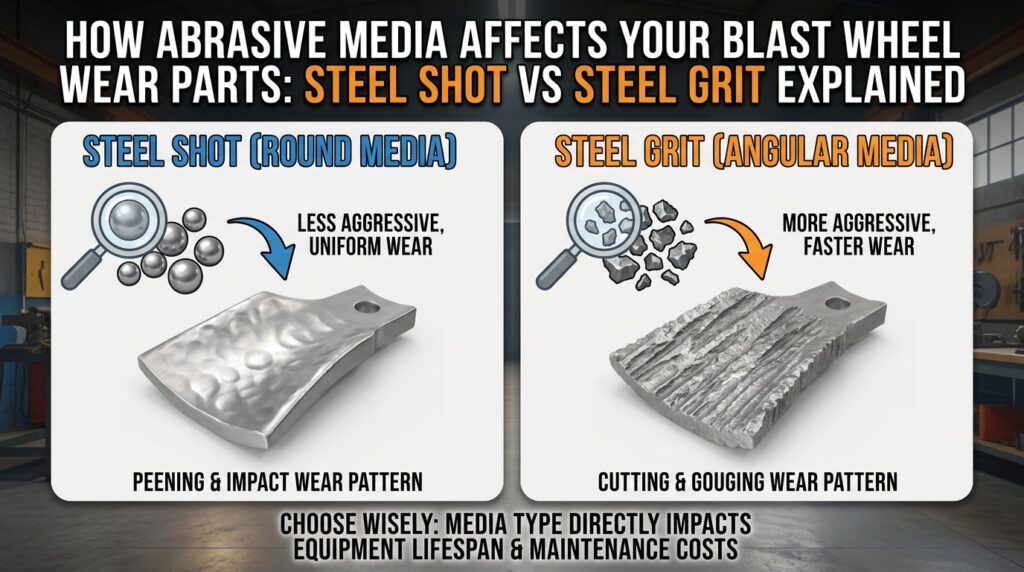
Steel shot and steel grit may run through the same blast wheel, but their shape changes how they clean a workpiece—and affects how carefully operators should monitor the wheel’s wear parts. Selecting the right media is therefore not only a surface-finish decision: it also helps keep the blast pattern stable, prevent avoidable damage, and ensure replacement components match the machine and application.
Media shape changes the work
Steel shot is rounded. Its impact tends to clean while also producing a peening effect. Steel grit has angular edges that cut into the surface and are used when a more pronounced surface profile is needed. The right choice depends on the material and thickness of the workpiece, the specified coating preparation, and the required finish. As The Fabricator’s guide to wheel blasting explains, media size and speed determine impact energy; excessive energy on light-gauge material can cause distortion.
How the wheel’s parts interact with the abrasive
In a centrifugal blast wheel, the impeller moves media through the control cage and onto rotating blades, which propel it toward the workpiece. The control cage opening and position help determine the blast pattern. Media type, size, concentration, and mix all influence the process, so switching from shot to grit should prompt a check that operating settings and the resulting pattern remain appropriate.
The blades directly accelerate the abrasive and are key wear items. The impeller and control cage also deserve close inspection: wear in either can change where and how media reaches the blades, shifting the pattern. Liners protect the wheel housing from stray or rebounding abrasive. These components are not interchangeable across every wheel; verify the manufacturer’s fit and specification before ordering a shot blast spare part.
Grit’s angular shape cuts the workpiece more aggressively than rounded shot in many applications, but it does not support a universal claim that grit always wears every wheel component faster. Wear also depends on media size and condition, velocity, feed rate, operating hours, wheel design, and maintenance. Choose parts and inspection intervals for the actual machine and duty rather than relying on media shape alone.
Keep the media mix and blast pattern under control
Abrasive breaks down as it circulates, gradually producing smaller particles. The Fabricator notes that maintaining a balanced mix matters: too many fresh, larger particles can make blasting overly aggressive, while an inadequate or inconsistent mix can reduce process effectiveness. Follow the equipment maker’s guidance for media replenishment and check the finished surface as part of process control.
Inspect the blast pattern when performance changes. Because the control cage directs where abrasive reaches the blades, a shifted pattern may be a sign to check cage condition and position, along with the impeller and blades. Do not compensate for worn parts solely by changing the cage setting; diagnose the cause first. Viking’s parts listing illustrates how replacement offerings vary by wheel model, including tune-up kits with blades, impellers, and control cages, plus a designated heavy-duty grit blade set for some models.
Steel Shot vs Steel Grit: Quick Comparison
FactorSteel shotSteel gritParticle shapeRoundedAngularTypical surface actionCleaning with a peening effectCutting action; often selected for a more defined surface profileCommon considerationCheck impact energy, especially on thin or distortion-sensitive partsCheck profile requirements and monitor the blast pattern and wheel wear partsWear-part selectionMatch blades, impeller, cage, and liners to the wheel model and dutyConfirm that the wheel and blade specification suit grit service; some models offer dedicated grit blades
Actual results depend on media size and condition, velocity, machine configuration, and workpiece requirements. Consult the coating specification and equipment manual before changing media.
How to Reduce Unplanned Blast Wheel Wear
- Match the media to the finish requirement. Confirm the required surface profile and consider workpiece thickness and distortion risk before selecting shot or grit.
- Inspect the wheel’s core wear parts. Check blades, impeller, and control cage for wear or damage, and inspect housing liners before wear reaches the wheel housing.
- Keep the blast pattern consistent. When the pattern shifts, inspect the cage, impeller, and blades rather than adjusting one setting without checking component condition.
- Replace compatible parts as specified. Use the exact wheel model and manufacturer’s recommendations. Some suppliers offer coordinated tune-up kits; blade sets should be installed and balanced according to the wheel’s instructions.
- Control abrasive condition and feed. Maintain the recommended media mix and replenishment routine. Avoid unapproved changes to media size, speed, or flow.
These steps help identify changing conditions early, but they do not replace the machine’s maintenance manual or a qualified technician’s assessment.
Frequently Asked Questions
Does steel grit wear blast wheel parts faster than steel shot?
Not in every machine or application. Grit is angular and has a cutting action, and some wheel models offer heavy-duty grit blades. However, wear depends on the media size and condition, velocity, feed, wheel design, and operating practice. Follow the wheel manufacturer’s recommendations and inspect parts under actual operating conditions.
Which blast wheel parts should I inspect first?
Start with the blades, impeller, and control cage because they handle or direct the abrasive stream and can influence the blast pattern. Also inspect the housing liners, which protect the housing from abrasive impact. Use the machine manual to determine inspection procedures and limits.
Can I use the same blades for shot and grit?
That depends on the wheel model and the blade specification. A supplier lists a heavy-duty grit blade set for certain wheels, which shows that blade options can vary by service. Confirm compatibility with the wheel manufacturer or parts supplier before ordering.
How often should blast wheel wear parts be replaced?
There is no single interval that suits every installation. Media, production hours, wheel settings, part geometry, and maintenance conditions all affect wear. Set inspection and replacement intervals using the equipment manual, observed part condition, and changes in the blast pattern.
What information should I provide when ordering a shot blast spare part?
Provide the machine and wheel make, model, and configuration, along with the part name or part number if available. State whether the application uses steel shot or grit and describe the operating duty. Verify compatibility rather than selecting a part by appearance alone.
References
- “The basics of wheel blasting,” The Fabricator. Technical overview of media shape and energy, wheel operation, media mix, and blast-pattern setup.
- “Shot Blast Parts,” Viking Blast Systems. Manufacturer/distributor parts listing with wheel-specific tune-up kits and a heavy-duty grit blade set for certain models.